

Mini RFID Reader/Writer WS1850S
Mini RFID Reader/Writer WS1850S
Couldn't load pickup availability
 -92%
-92%
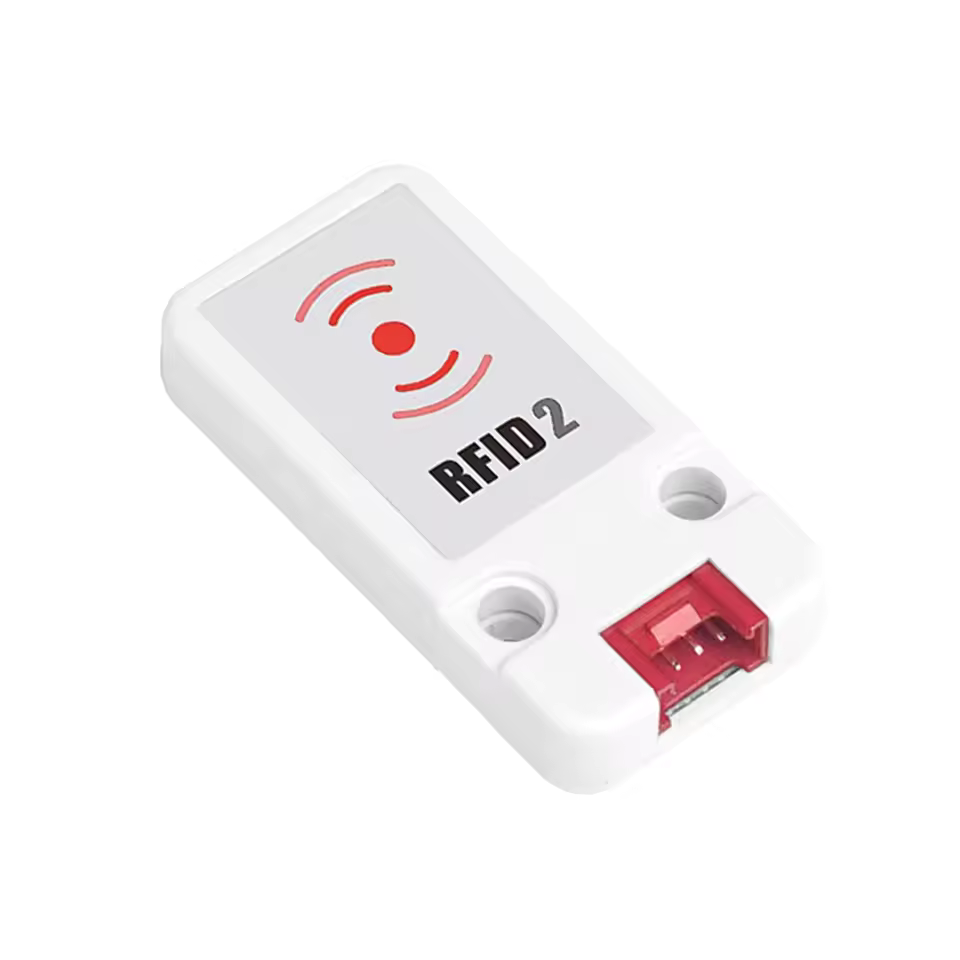
RFID2 Unit (WS1850S) is a 13.56MHz RFID reader/writer module designed for smart access, authentication, and identification systems. Built around the WS1850S chip, it provides stable, non-contact two-way communication using magnetic field induction, supporting card reading, writing, recognition, and encoding.
Key Features of RFID2 Unit:
- Operating frequency: 13.56 MHz (ISO14443A, MIFARE, NTAG support)
- WS1850S Read/Write IC with 64-byte transceiver buffer
- I2C interface (Fast mode: 400 Kbit/s; High-speed: 3.4 Mbit/s)
- Compact size: 48 × 24 × 8 mm (6g net weight)
- Compatible with Arduino & UIFlow (Blockly, Python)
- Includes 2 × LEGO-compatible mounting holes
Applications:
- 🏠 Smart home access control
- 🚗 Vehicle entry & management systems
- 🚉 Smart transportation solutions
- 📚 Smart bookshelf & library tracking
- 🏢 Check-in & event registration systems
What’s in the Box:
- 📦 1 × RFID2 Unit (WS1850S chip)
- 🔌 1 × HY2.0-4P cable
Specifications:
- Read/Write IC: WS1850S
- Operating Frequency: 13.56 MHz
- Communication Protocol: I2C (Addr: 0x28)
- Supported Protocols: ISO/IEC 14443 Type A/B
- Data Storage: > 10 years
- Reading Distance: < 20 mm
- Working Temperature: -20℃ to +85℃
- Net Weight: 6 g | Gross Weight: 21 g
- Product Size: 48 × 24 × 8 mm
- Packing Size: 67 × 53 × 12 mm
⚠️ Legal Disclaimer:
This device is intended for development, prototyping, and authorized RFID applications. Unauthorized use for cloning, tampering, or unlawful access is strictly prohibited.
🧠 Microcontroller: ESP32-PICO-V3-02 (Wi-Fi + BLE)
📺 Display: 1.14" IPS LCD (135×240)
🔋 Battery: 200mAh Li-Po, rechargeable via USB-C
⚙️ Port: USB Type-C (5V input)
💾 Storage: Flash memory with script support
📡 Connectivity: Wi-Fi 802.11 b/g/n + Bluetooth 4.2
🧩 Expansion: Grove port, GPIO headers
📏 Dimensions: 48.2 × 25.5 × 13.7 mm
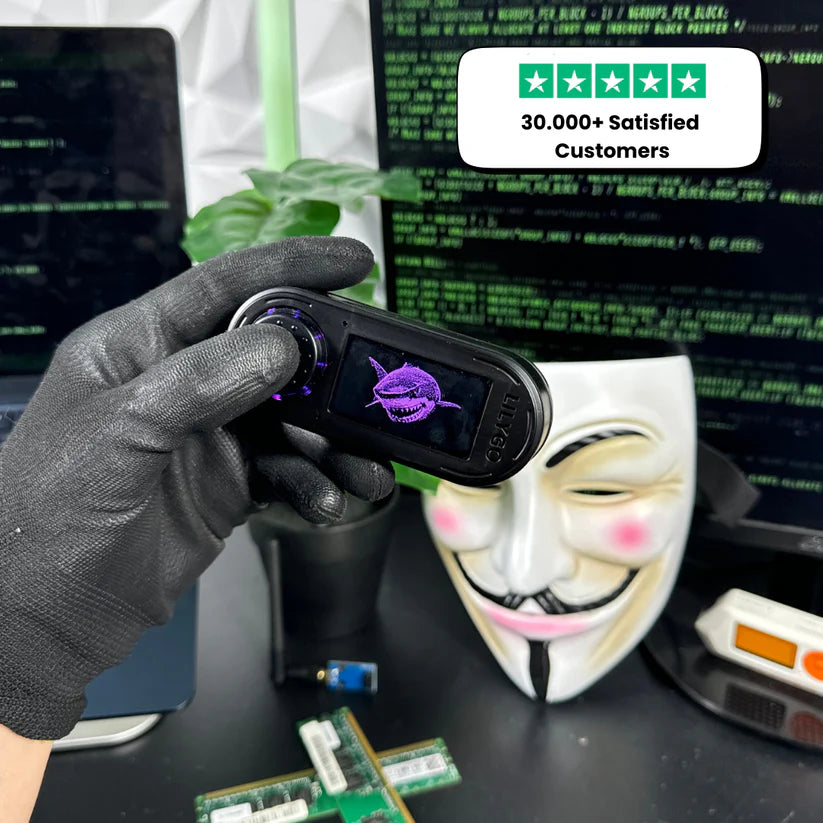
T6Shark Plus
Both theCC1101chip and the antenna are designed to operate at frequencies in the 300-348 MHz, 387-464 MHz, and 779-928 MHz bands.
Ethical Hacking & Security Research
Wireless Security Analysis
Perform legal network scanning and penetration testing with ESP32's Wi-Fi/Bluetooth capabilities
Customizable Scripts
Develop security tools using Arduino IDE, MicroPython, or UIFlow for ethical hacking purposes
Portable Penetration Kit
Compact design for on-site security audits and vulnerability assessments
Sensor Integration
Use built-in sensors for environmental monitoring during security operations